
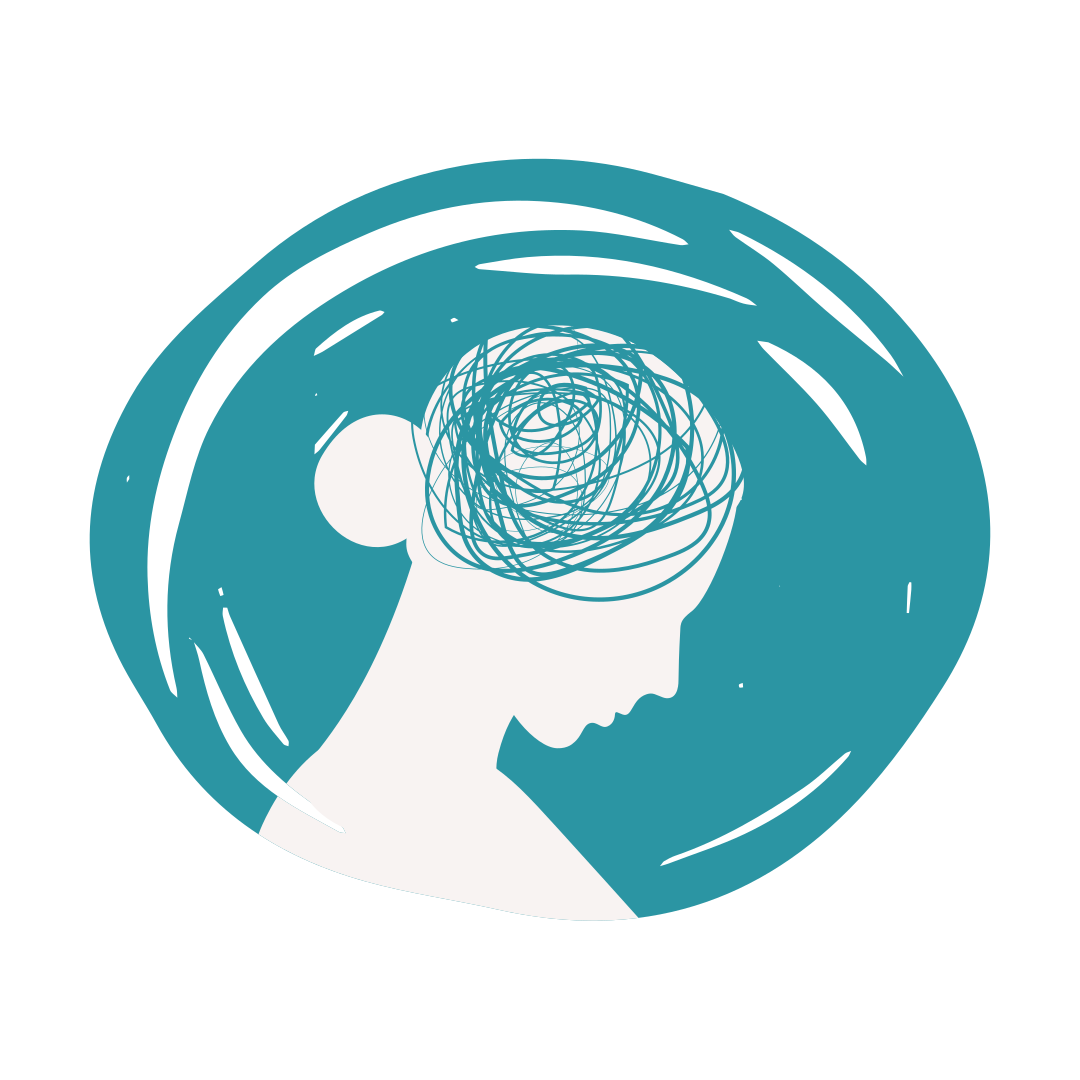
You finally finish work. You make yourself a cup of tea, sit on the couch and think, “Perfect. Time to relax.” Your brain, however, seems to have missed the memo.
Instead, it decides this is the ideal moment to replay that conversation from three days ago, plan next week’s schedule, wonder whether you replied to that email appropriately…
Not exactly the peaceful evening you had in mind.
If this sounds familiar, you’re not alone. Many people describe feeling as though their mind is always “on.” Even when life is relatively calm, their thoughts continue scanning, analysing and preparing for… well, something.
Sometimes this is called overthinking. Sometimes anxiety. Sometimes perfectionism.
Whatever we call it, it can be incredibly tiring.
Interestingly, the people who experience this are often the ones who appear to have everything together. They are responsible, thoughtful, caring and dependable. They’re the colleague everyone trusts, the friend who remembers birthdays and the person who is already thinking three steps ahead.
Useful qualities. Just… exhausting when your brain never gets a day off.
People often tell me: “I know there’s nothing wrong. So why can’t I switch off?” It’s a good question. And the answer is rarely as simple as “you’re just an overthinker.”
Our minds usually develop habits for a reason.
Perhaps, at some point in your life, paying close attention to other people’s emotions helped you avoid conflict. Perhaps being prepared made you feel safer. Perhaps achieving, helping or getting things right became closely connected to feeling accepted or valued. When something has protected us in the past, our brain tends to keep using it—even when it’s no longer necessary. It’s a little like carrying an umbrella every day because it rained once. At first it made perfect sense. After a while, you barely notice you’re carrying it. The same can happen emotionally. You become so used to being alert that relaxing starts to feel… strange.
Some people even feel guilty when they’re resting. Others notice that moments of silence quickly become moments of self-evaluation. “Shouldn’t I be doing something?”, “Am I making the right decisions?”, “Could I have handled that conversation differently?”.
The goal, however, isn’t to stop thinking. Thinking is one of our greatest strengths. It helps us solve problems, understand ourselves and connect with others. The question is not whether you think too much. A more interesting question is:
Why does my mind feel like it always has to monitor me?
This is often where therapy becomes helpful. Rather than trying to silence your thoughts, therapy invites curiosity about them. When did this pattern begin? What purpose might it have served? What expectations have you learned to carry? How do you speak to yourself when you make a mistake?
From a systemic perspective, we don’t only look at the individual. We also look at the relationships, environments and experiences that have shaped the way you relate to yourself today. Sometimes what feels like “my personality” turns out to be a way of adapting that once made perfect sense.
Understanding that doesn’t erase the pattern overnight. But it often replaces self-criticism with something much more helpful: compassion.
Because it’s difficult to change something when all you do is blame yourself for having it. Many people come to therapy hoping they’ll finally learn how to “switch off.” What often happens instead is something quieter. They begin to feel less controlled by their thoughts. There is more room to pause. More room to enjoy a conversation without analysing every sentence afterwards. More room to sit on the couch… and simply sit on the couch.
Not because life suddenly becomes perfect. But because they no longer feel responsible for solving every possible problem before it even exists.
A question to reflect on
When did I first learn that staying mentally “on” helped me feel safe?
Further exploration
If this topic resonates with you, you might enjoy exploring the Maastricht University Wellbeing Movement. Their workshops and resources cover topics such as stress, balance and mental wellbeing, and can be a helpful complement to your own reflections.
Anna-Maria Sakellariou is a Psychologist NIP at Therapy Sofa, an English-speaking therapy practice in Maastricht for individuals and couples. Her approach is informed by systemic psychotherapy.